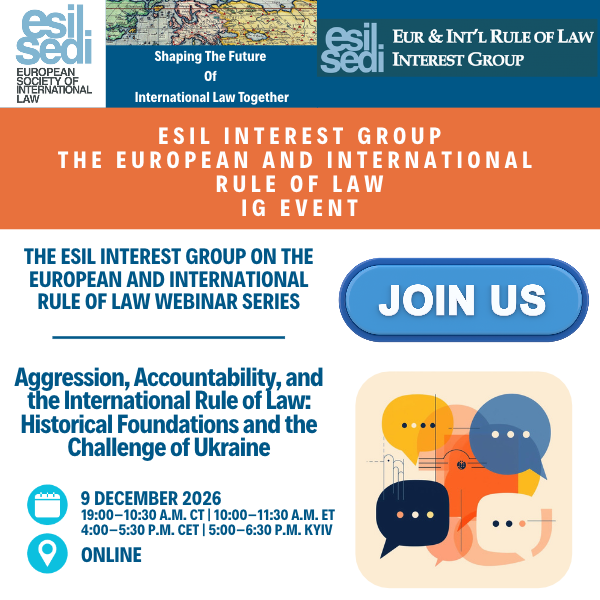
ABOUT THE EVENT
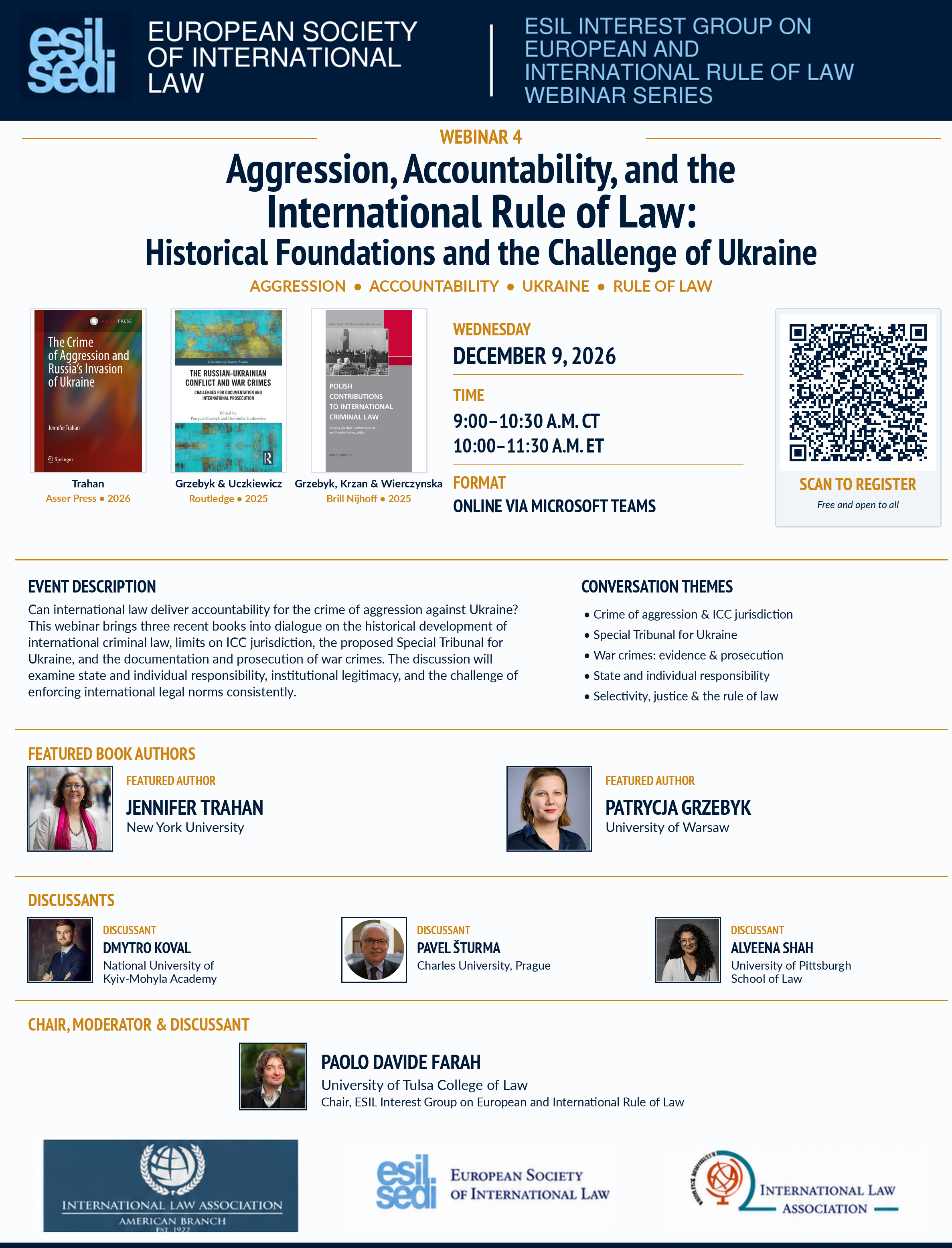
Aggression, Accountability, and the International Rule of Law: Historical Foundations and the Challenge of Ukraine will bring together scholars of international law, international criminal justice, international humanitarian law, and international legal institutions to examine the prohibition of aggression, the evolution of international criminal responsibility, and the challenges of ensuring accountability for serious violations of international law.
Russia’s invasion of Ukraine has brought renewed attention to foundational questions concerning the prohibition of the use of force, the crime of aggression, international criminal jurisdiction, state responsibility, and the effectiveness of international institutions. At the same time, these developments invite a broader historical and critical examination of the international legal order: how its fundamental prohibitions emerged, how they have been interpreted and enforced, and why accountability mechanisms have often operated unevenly across different geopolitical contexts.
The webinar will place three recent publications into dialogue, connecting the historical development of international criminal law with contemporary debates surrounding the investigation, documentation, prosecution, and legal consequences of international crimes committed in Ukraine.
Rather than treating the books as separate presentations, the event will explore their complementary contributions to understanding the relationship between international legal principles, institutional design, accountability, historical experience, and the rule of law.